

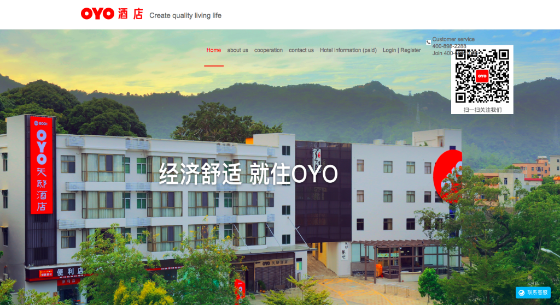
Oyo is adding rooms faster than any other hospitality brand in the country. However, it raises doubts about the market and the users.
Brief:
As per ET Oyo will be entering UK. It plans to invest INR 400 crore to establish the brand there. It will start with Oyo Townhouse.
Before entering UK Oyo had entered China. It has 50,000 rooms in 26 cities such as Shenzen. It added 26,000 rooms in just one month.
China’s market is half of India’s market. India has 1,01,000 rooms in 150 cities.
What is Oyo’s business model?
Oyo Townhouse: It’s a hotel chain, which OYO owns and runs. Price of each room is INR 2500 and above.
Oyo Flagship: This is a franchise mode. Each room costs INR 1000 to INR 1500 per night. OYO leases out properties of others and manages them. It charges a commission of 22%. 90% of its revenue come from this.
Oyo Rooms: It aggregates the existing property under its brand. Each room costs INR 1000 to INR 2500 per night. It charges a commission of 18% per booking. It is not more than 10% of the total revenue.
Oyo Homes: It rents out vacation homes, which it manages.Does it make sense?
Is it making money?
Business Standard reports that In FY 17 it earned INR 140 crore, at a loss of INR 325 crore. In FY 16 it had made INR 32 crore, at a loss of INR 496crore.
Till date it has raised INR 2800 crores. Therefore, it has the runway to try different business models.
India does not provide more space to grow, as it has only 30 million customers. To grow beyond, it has to move outside like Zomato and Ola did.
NDBJ Insight:
Budget hotels in India is a tough market to crack. Oyo is not the first brand to aim to dominate it. Ravi Nair of Holiday IQ writes that to acquire scale, budget brands sacrifice customer service. Oyo employs half the people than a typical budget hotel. Also, the focus is more on increasing bookings vis a vis knowing why does a customer book. Therefore, small businesses thrive, but not big brands doing budget hotels. Oyo faces the same challenges.
If we compare with Airbnb: It is present in 191 countries and 86,000 cities. Their listing is 4.5 mn, catering to 300 mn guests till date. Now they also list boutique hotels and B&Bs ( 1,80,000). In China they have 1,50,000 active listings. It isn’t just a bed and breakfast booking site.
Markets outside India already have leaders such as Jin Jiang in China, Airbnb in Europe and local businesses in Thailand, Malaysia and Nepal. Offering incentives as a strategy may not work in the long term.
Skift also reported that Airbnb isn’t growing fast as before, as travellers prefer traditional set ups such as budget hotels. It may be good news for traditional hotel businesses and budget hotels. It may also be helpful for Oyo’s expansion.
Worth reading: Twitter thread about why VC funded mass market brands do not succeed in India
Update: Oyo has raised $ 1bn from Softbank and other investors.
In August Entrepreneur reported that Oyo was present in 26 cities. Now as per Skift’s piece it is present in 171 cities.
Just two months ago Oyo had 50,000 rooms in China and 1,01,000 rooms in India. Now it has 87,000 rooms in China and 1,25,000 rooms in India.