

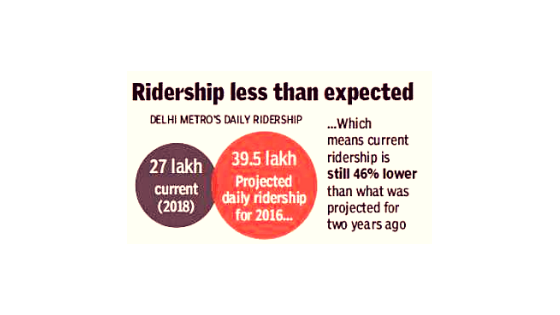
Commuters in Delhi-NCR have to shell out the highest percentage of their daily wage for a ride in metro. It is also not good for businesseses.
Brief:
Delhi Metro can increase Delhi-NCR’s GDP by four times.
While it is expanding, fewer riders are finding it affordable.
It’s ridership has come down by 32%.
Why is it unaffordable?
CSE reports that it is world’s second most expensive. In Delhi 14% of income goes into using metro every day. London is
In Hong Kong it is 2.9%, while in Paris it is 6.6%, 5.3%Vin Beijing and 4.6% in New York.
Delhi Metro contested its report. It claims that it is only 5% of the income. CSE refuted its claim with more data.
How is it impacting local businesses?
Low skilled workers have shifted to buses, which are cheaper. However, the time to commute has increased by two times.
A saving of INR 60 per day can help wage earners ( INR 500–700/ day) get medical insurance or daily dose of protein along with time to recuperate.
Ease of commuting helps businesses by employing cheaper or more skilled workers, as the pool increases.
What’s the way forward?
Rationalizing fares as per the future estimates. DMRC’s fare revenues were enough to meet the operating expenses in 2016–2017. The ridership hasn’t increased. So, should the fares.
34% of Delhi’s households ( average income of INR 12,500) can not afford even non air-conditioned buses. This is also the working class. Lack of transport deprives them of more fruitful employment.
More buses on the roads, getting E-buses, and making BRTs on a scale that is locally appropriate. Currently the last mile is costlier than the metro tickets.
Recommended reading: